Pulse.
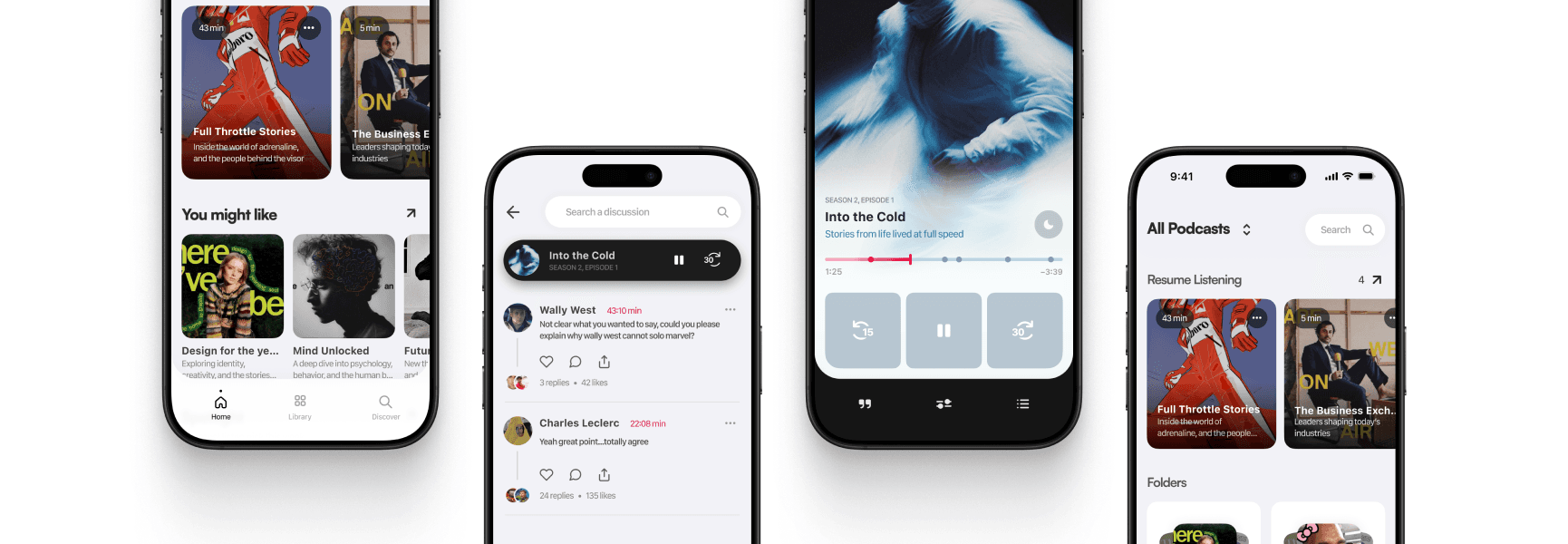
A podcast app focused on bridging the gap between listeners and creators through in-episode polls, feedback tools, and discussion prompts, supported by a streamlined and accessible playback experience.
Project timeline
17 - 20 Nov, 2025
Project Type
Design Sprint
Tools
Figma
Figjam
Google Forms
My Role
Product Designer →
Research, Strategy, Execution
Overview
Rethinking Podcast Listening
This project explores how podcast listening could feel less passive and more participatory.
Most podcast apps are built around playback; play, pause, skip, repeat. This project explores a different direction: what if podcast listening felt more like a conversation than consumption?
I led the research and product thinking, translating insights into a clear problem statement, MVP scope, and interaction strategy. I was also responsible for the information architecture, core UX flows, and UI design across the app.
Given the short timeline, I intentionally limited the scope to test a single idea well, using in-episode polls and discussion prompts to introduce engagement as a behavior.
Current Space
The Current Podcast Landscape
Podcast listening today is dominated by a few big players, each winning for very different reasons. While most people use mainstream apps for convenience, power users often migrate to niche platforms that offer deeper control. By benchmarking the platforms, I found the following key insights.
Spotify is popular for its recommendation algorithm and discovery. Users rely on it to surface new podcasts without much effort, especially if they already use Spotify for music.
Apple Podcasts benefits heavily from the Apple ecosystem. It comes pre-installed, syncs well across devices, and feels familiar to iOS users.
Mainstream apps
PocketCasts is loved for its clean UI, advanced playback controls, and features like silence trimming and episode archiving
Overcast attracts users who care about audio control, smart speed, and a no-frills listening experience.
Power-user favorites
While people love certain features of certain apps but Podcast listening… is completely passive
Delving into research
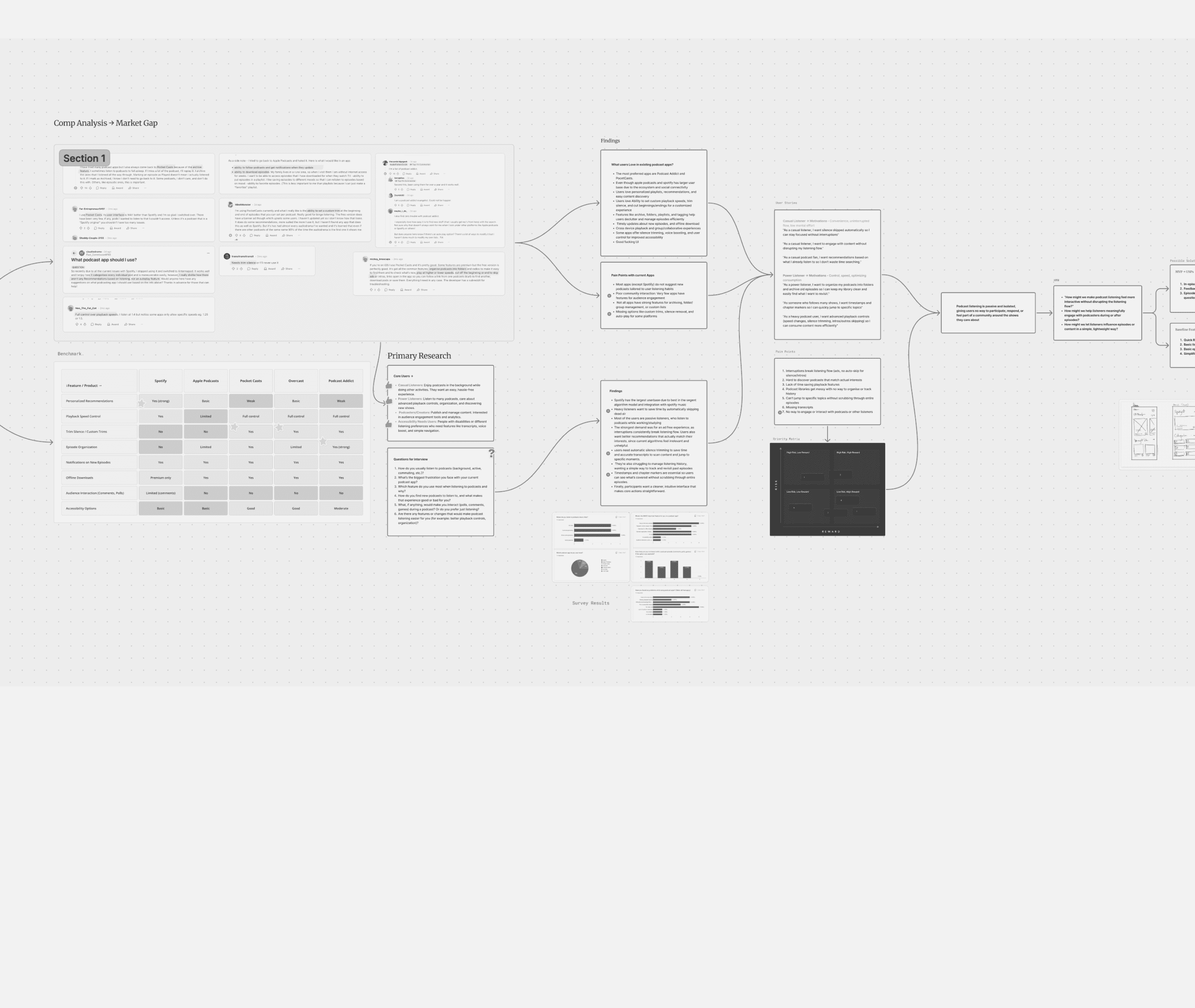
Early research focused on understanding how people currently experience podcasts and where that experience breaks down. I combined secondary research, app analysis, and informal surveys to uncover behavioral gaps
How do people experience podcasts today?
Listeners consume podcasts passively, often while multitasking. Listening is treated as background activity, with little opportunity to react, respond, or reflect in the moment.This makes podcasts feel personal, but also isolating.
Why don’t people engage today?
Most podcast apps don’t support interaction during listening. Existing engagement happens outside the episode, on platforms like X, Reddit, or YouTube comments. This breaks context and creates friction between listening and responding.
When do listeners want to engage?
Engagement doesn’t happen constantly. It tends to occur at specific moments:
→ when a strong opinion is shared
→ when a question is asked
→ when listeners feel represented or challenged
What is missing from the current experience?
While users have no way to respond, react, or participate within the listening experience itself, they did not explicitly ask for interaction features. In fact, many were neutral or unsure when asked about engagement during listening.
Stakeholder pain points
Looking closer, this space really comes down to three stakeholders
Audience
Podcast listeners spend hours with content but have no simple way to react or feel involved while listening, making the experience feel isolated.
Podcaster
Creators lack immediate, in-context feedback, making it hard to understand what resonates with their audience beyond download numbers.
Platforms
Platforms struggle to differentiate beyond playback and discovery, with limited ways to foster deeper engagement or community around shows.
Core Problem Statement
Podcast listening today is designed as a one-way experience, leaving both listeners and creators disconnected during the moments that matter most
Opportunity
How can we build something great?
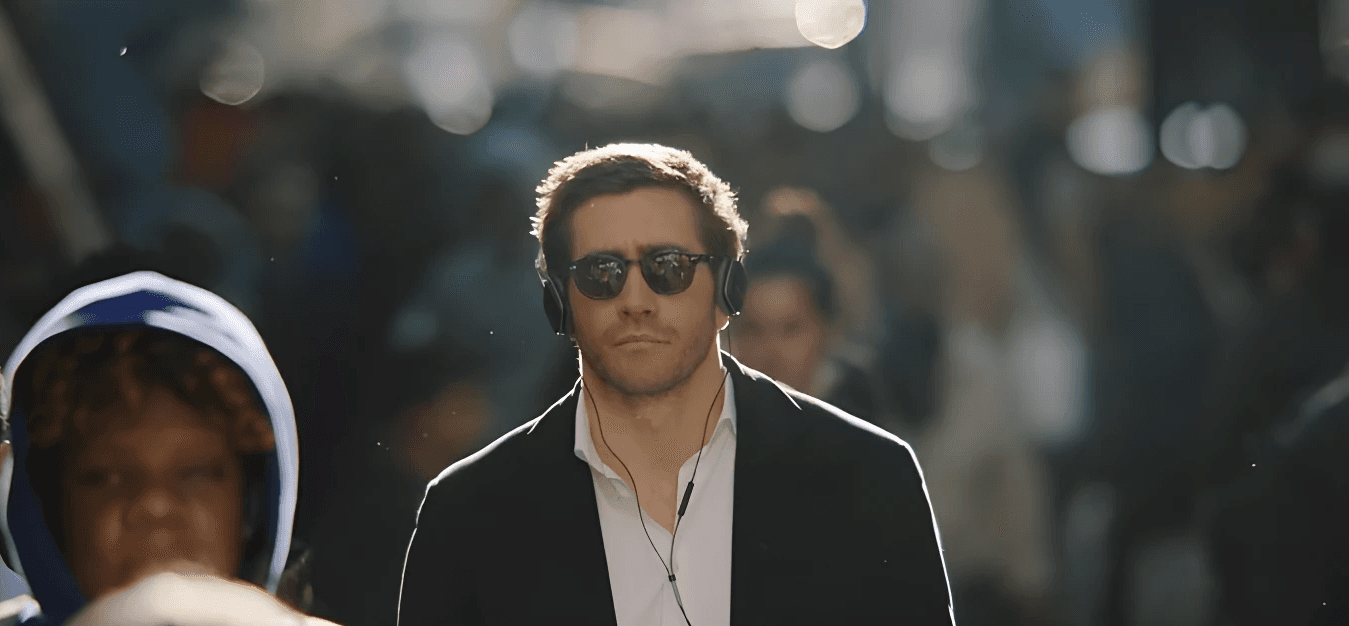
Podcast listening is often done while multitasking walking, commuting, working, or resting. Any solution that required too much attention would immediately break the experience people already value. This led me to ask a different set of questions:
“What if podcast listening didn’t have to be one-way?”
“What if listeners could influence what comes next?”
“What is the smallest possible action a listener could take while still feeling involved?”
Approach
Scoping Down
From earlier competitive study, I noticed that users consistently valued specific features across different podcast apps. Rather than reinventing everything, I narrowed the scope and grouped these patterns into three core categories.
Must Have
Resume listening and accurate playback memory
Basic listening history and progress tracking
Core playback controls including skip, speed, and seek
Should Have
Episode organization through folders or simple grouping
Silence trimming and intro or outro skipping
Personalized recommendations based on listening habits
Quick discovery through categories and smart surfacing
Could Have
In-episode polls
Episode discussion prompt
Feedback and ideas from listeners
Non-negotiable features essential for the product to function / the release to be viable
Important features that add significant value but aren't critical for immediate success
Although treated as experimental and validated through concept testing, this category represents the core differentiator of the product.
*
Not every popular feature was treated as essential. I intentionally deprioritized power-user optimizations unless they supported the core listening experience
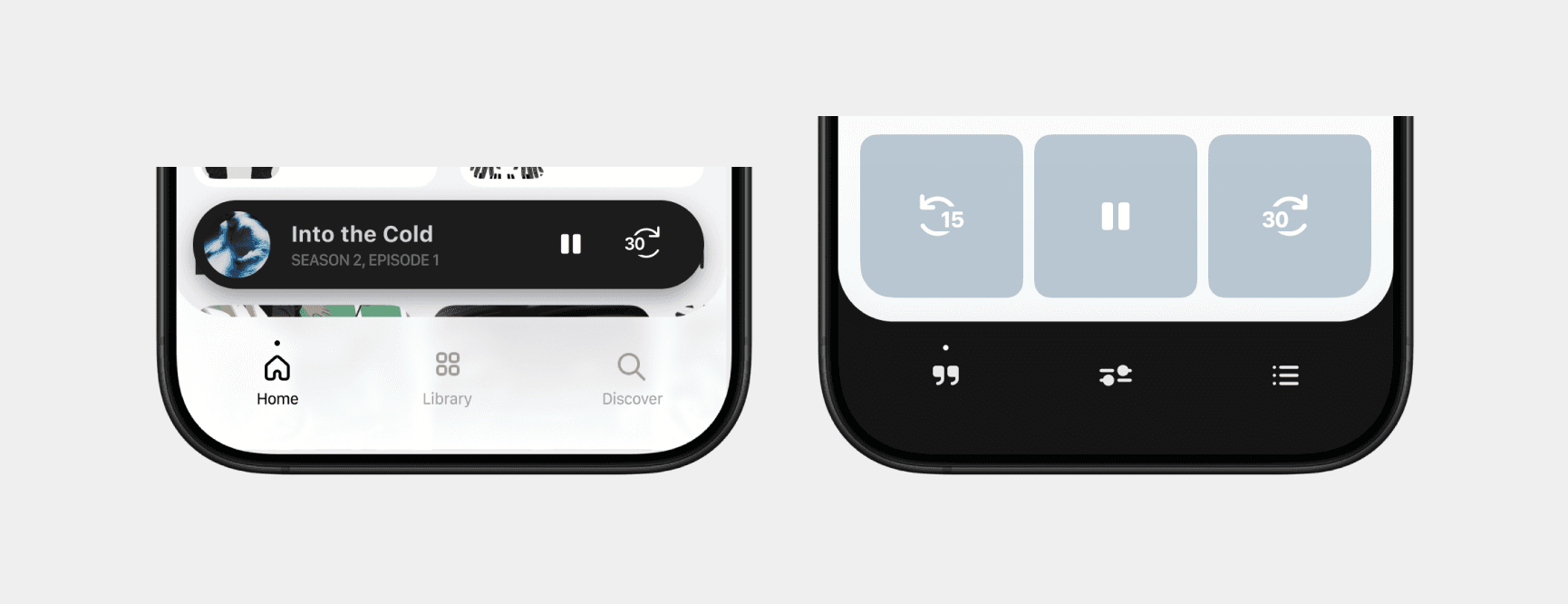
After a few explorations, I realized the app needed two layers of navigation serving different purposes.
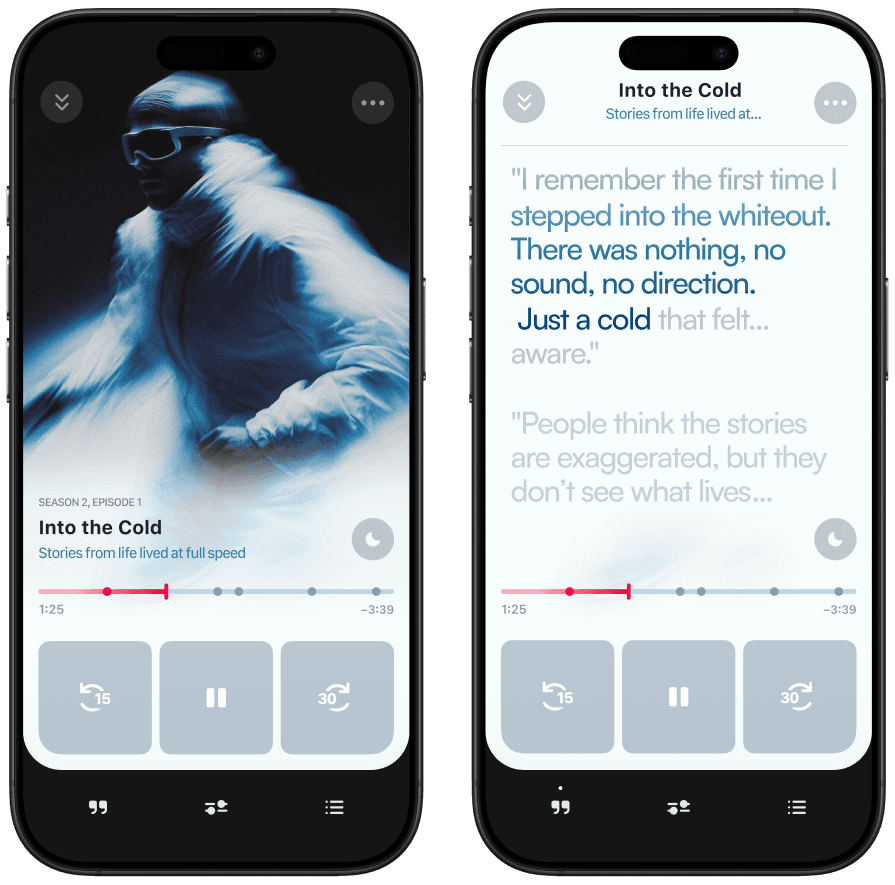
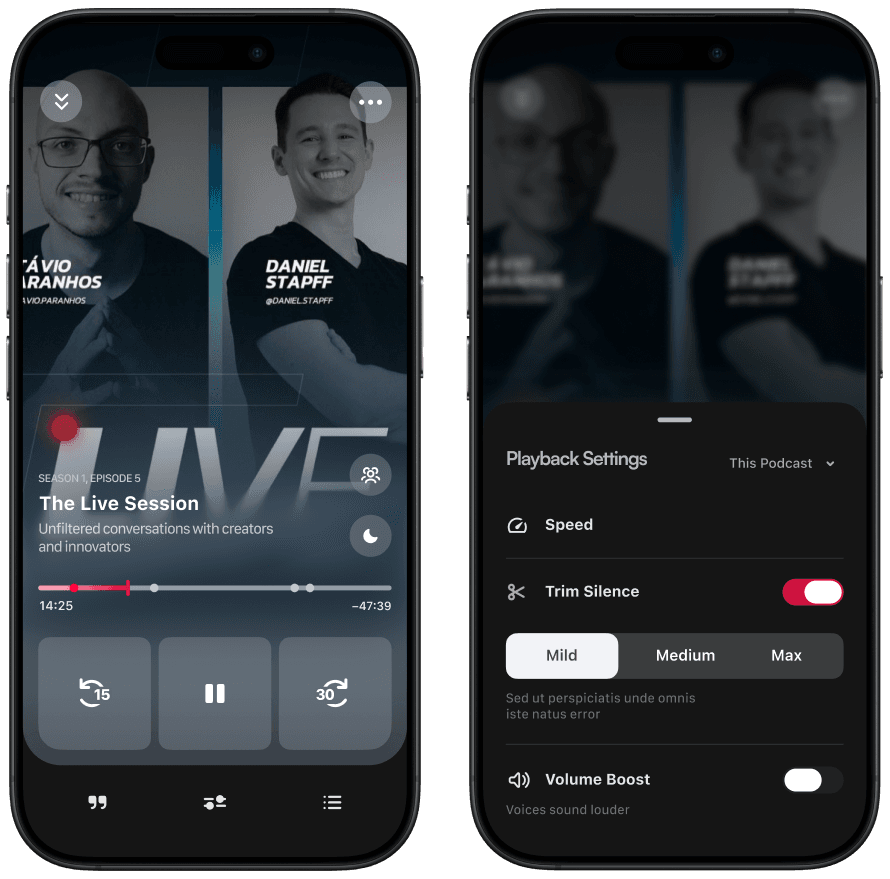
The primary navigation (Home, Library, Discover) supports discovery and quick access without pulling attention away. Inside the player screen, a secondary navigation layer surfaces listening-specific actions like playback controls, timestamps, annotations, and queue.
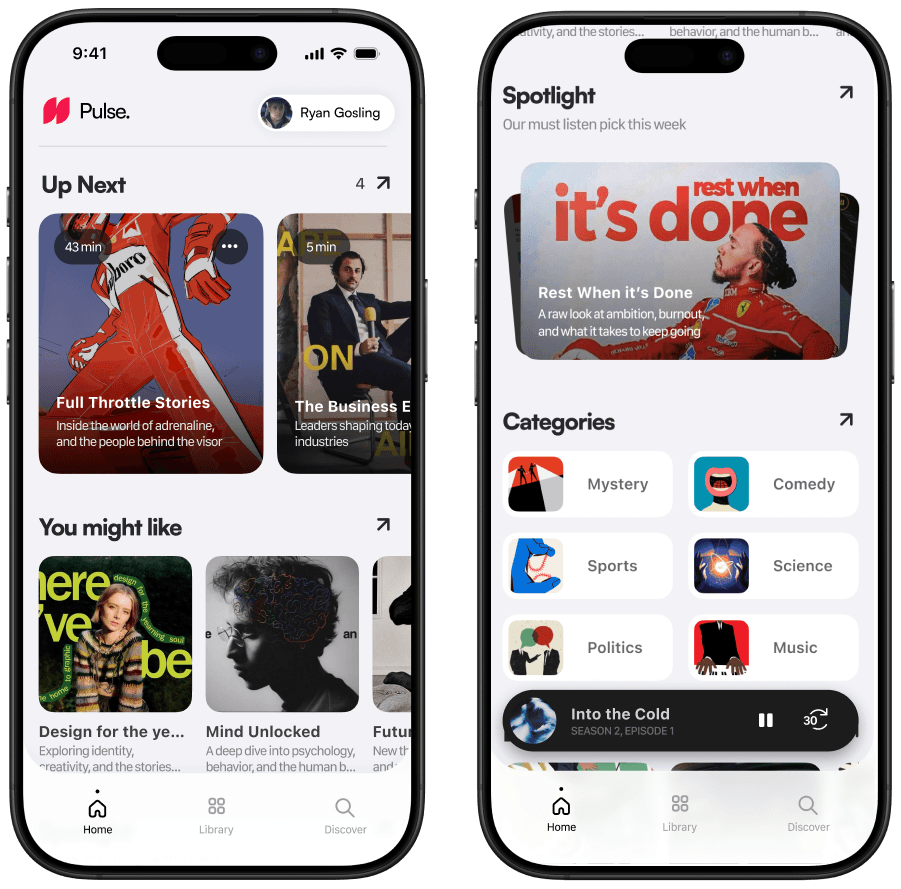
The home screen is built around continuity. I prioritized Resume Listening and Up Next so users can jump back in instantly, while discovery stays lightweight through a single Spotlight pick and categories.
I treated the Library as a place for intent, not discovery. This is where users come back to continue, manage, and revisit content they already care about.
I treated the Library as a place for intent, not discovery. This is where users come back to continue, manage, and revisit content they already care about.
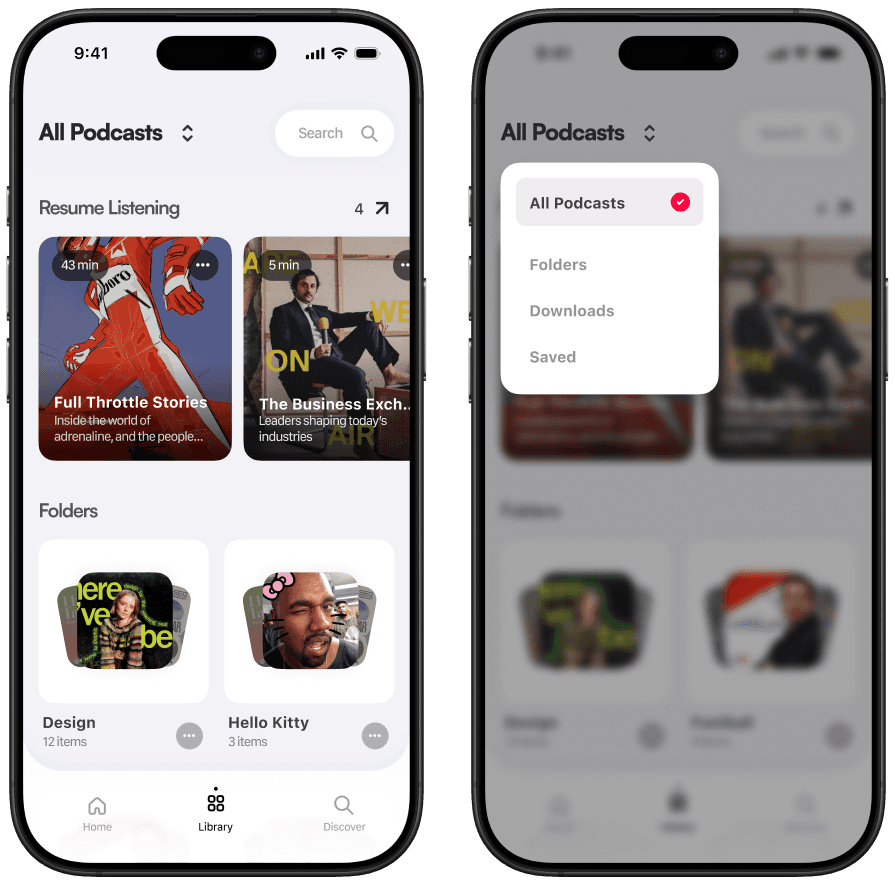
I treated the Library as a place for intent, not discovery. This is where users come back to continue, manage, and revisit content they already care about.
I treated the Library as a place for intent, not discovery. This is where users come back to continue, manage, and revisit content they already care about.
Rather than overwhelming the core experience, I deliberately surfaced advanced controls like custom speed, silence trimming, and volume boost as optional tools for power users who need deeper control or accessibility support
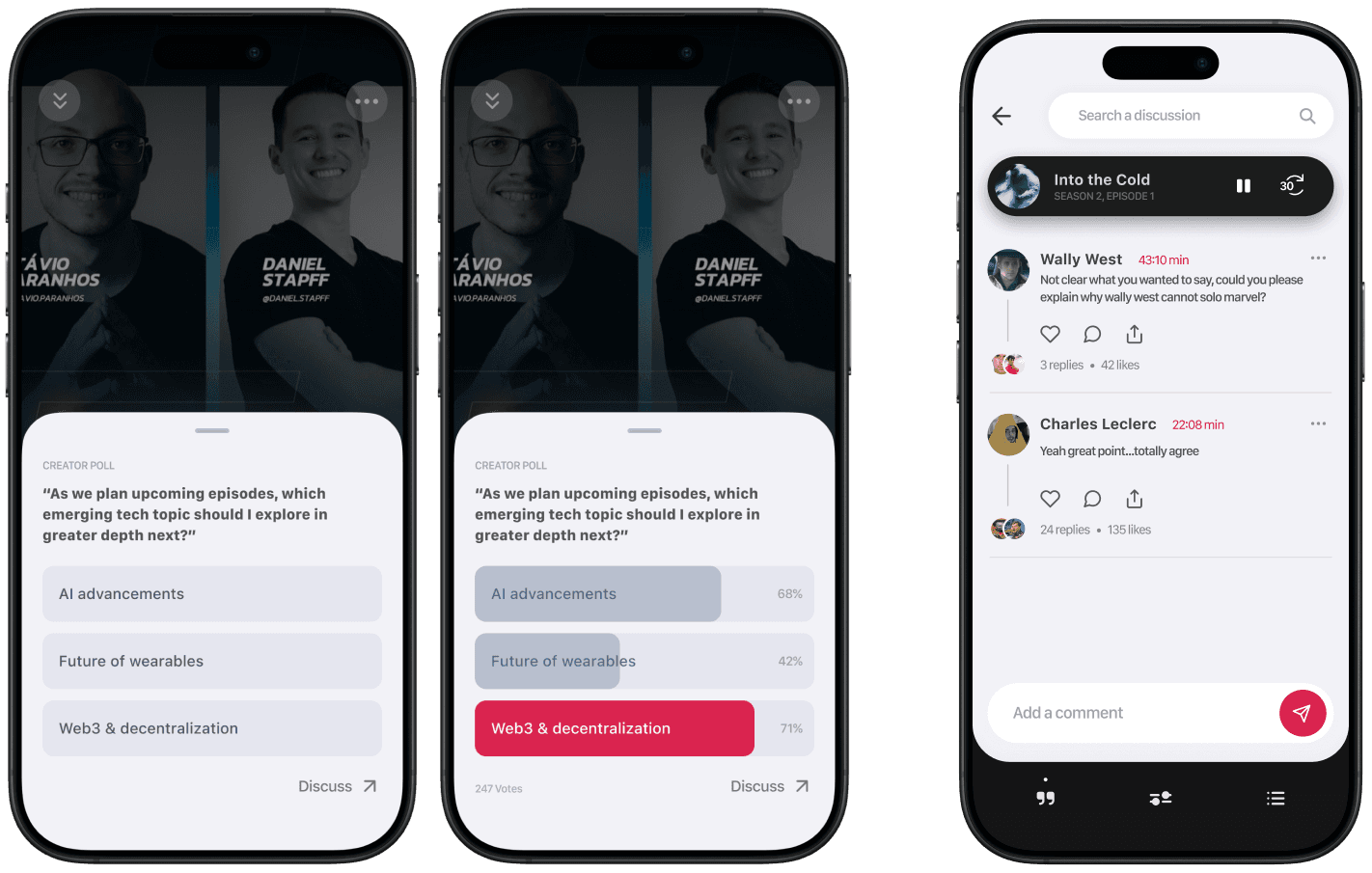
I treated interaction as optional, not mandatory, knowing most listeners are hands-free while listening.
Creator polls are lightweight and time-aware, allowing listeners to respond when it’s convenient, not disruptive. Discussions are separated from playback to avoid interrupting passive listening, while still giving engaged users a clear place to respond.